1.Please tell us about yourself--full-time writer? fiction
or non-fiction?
I've been a writer since I wrote a story called "Audrey
Alligator" when I was in a fifth-grade creative writing
class. Most of my writing until my first book self-published
recently was non-fiction, since I was sports editor of my
high school newspaper, editor of my college paper, and a professional
newspaper reporter and editor off and on for several years
after college, including as a "stringer" for the Oregonian.
In my early 20s I moved to Alaska for a couple of years, but
returned to become a single parent of a young child I had
left with her mother (that daughter, Megan, is 31 now and a
graphic artist. She designed the cover of my book). I moved
back to Oregon in 1980 in the middle of a recession and
couldn't get a decent job for a year. Eventually, I passed a
test to become an office worker for Clackamas County and
became a receptionist in a community mental health program.
That's how I came to give up being a journalist and spend
the next 28 years in mental health. I retired in July 2010
from Lane County, and also worked at Klamath County in the
middle.
During those 28 years I continued to write -- for my work,
op-ed pieces, mostly about the crumbling public mental
health system, letters to the editor, the occasional
personal essay that was published. I saw early on that my
work in mental health exposed me to lots of people,
situations and events that might make a good stories in a
book someday. I collected material -- much of it scribbled
on sticky notes so I wouldn't forget it -- for 20+ years. Finally about 3
or 4 years ago I decided to go to a writers' workshop on the
coast and in preparation for that I made up a 4,000-word
story about a homeless mentally ill man who lived along a
creek in the fictional liberal college town of Callamette
Falls, which sounds a lot like Eugene, where I live. That
story is now chapter 5 in my book, "Crashing Through the
Underbrush."
I had been intimidated by the idea of writing dialogue,
having never done that as a reporter, and working full-time
in a stressful job also gave me lots of excuses to postpone
serious writing. Now that I'm retired from full-time work I
can tell people "I'm a writer" when they ask what I do,
though I don't do it full time yet. I've started work on a
second book, about a cab driver who works graveyard in
Anchorage, Alaska -- something I really did -- and I hope to
make a lot of progress on that project when I go to a
writers' workshop in May that involves cruising across the
Atlantic in a ship.
2. What prompted you to use LuLu?
I started writing my first book 3+ years ago and leaned
pretty early on toward self-publishing versus traditional
publishing. I joined writers' groups and went to workshops
where I heard repeatedly from people who should know that
you can't get a publisher if you don't have an agent and
it's really hard to get an agent! I heard about lulu.com and
other similar companies along the way, and had a friend here
in Eugene who self-published using lulu and was happy with
the experience
and the result. I also visited lulu's website several times
and liked what I saw.
3. How has it been? difficult, easy?
It's been challenging at times because publishing a book, no
matter how you do it, is a complicated process, with lots of
potential barriers to overcome. I was frustrated at how
long it took, about three months from start to finish, but
in the grand scheme of things, I guess that isn't that long!
I have no significant complaints about lulu or it's process,
and I thought the pricing was reasonable. Once I bought a
"package" I was assigned to a "services coordinator" (same
job title I had for a time when I worked with disabled
people). She worked with me every step of the way via
email, to accomplish all the tasks, edits, formats and
reviews, uploading this and that, etc. Probably the most
frustrating part was the never-ending process of finding
more mistakes and typos and getting them corrected, after I
thought I'd found them all. I learned that it's harder to
spot typos and mistakes on a computer screen that it is when
reading them in an actual book. When they sent my first
"galley" to read I thought I would just skim it and see that
it was perfect and tell them start printing. Instead I found
35 more typos! Virtually all of them were very minor, but
there
were too many to ignore so I had to pay an additional $60
for another set of errors to be corrected, since I had
already used my two permitted "alterations" that were part
of my package to fix earlier typos.
4. What is your marketing plan?
Early on I made a comprehensive list of all the things I
could do to market my book -- start a website and blog,
contact book stores, contact local newspapers about reviews,
develop a "platform," try to get the local country radio
station to plug my book because one of its themes is the
inspiration of country music, scheduling an author's event
at the local library, etc.
Once I was close to having actual books -- about three or
four weeks ago -- I fine-tuned the marketing plan and
changed it from a list to spread sheet on my laptop so I
could track the dates I did various things, indicate who the
contact person was, what was the outcome, what still needed
to be done, etc. A related issue is that I've started
another spreadsheet to track expenses associated with
marketing the book, information I will need at tax time next
year. This morning, for example, I spent $3.67 to ship 4
books to the bookstore in Prineville for consignment.
I've heard repeatedly at workshops about the importance of
having a "platform," especially if you're self-publishing.
My platform is my connections in the Oregon mental health
community, built over 28 years. Those are the people that
will be interested in what I have to say, will buy my book,
and give me opportunities to speak. Just yesterday, for
example, I scheduled a book release party at the main local
bookstore that is carrying my book, Tsunami Books here in
Eugene. I told the owner I thought I could get 50-75 people
there, most of whom will buy books. These are former
colleagues, people who work at non-profits that I worked
with, family members from the National Alliance on Mental
Illness that I've known for years. I've also been giving
"teasers" on Facebook for 2 or 3 months and updating my blog
subscribers regularly. I just hope the book lives up to all
the hype!
I've been disappointed at how hard it is to get one's
self-publised book into stores, but I saw that coming, so
know I have to be assertive and persistent. Haven't been
able to get a single bookstore in Klamath Falls, for
example, to carry my book, though much of the action takes
place there and I have many former co-workers who would buy.
Can't get the local newspaper to do a review either. Am
thinking about placing a small display ad in the paper.
Gotta be creative!
5. For those who are trying to decide between
self-publishing and traditional publishing what advice
would you give?
Last August I went to my first ever Willamette Writers'
Conference in Portland. The first words out of the mouth of
the first speaker on the first day, an agent, were: "I get
10,000 manuscripts a year sent to me. I choose to represent
25." It confirmed my belief that self- publishing was best
for me. In fact, later I wrote a blog post, the headline of
which was: "25 divided by 10,000 is a really small number!"
People close to me encouraged me to try to find a
traditional publisher, but I held firm and have not
regretted self publishing. Having said that, I would never
discourage anyone from doing their own research into both
ways of publishing before deciding what's best for them.
I've heard more than once that there are really good books
that never get published because their authors are not
sophisticated enough, or assertive enough, or knowledgeable
enough to garner themselves an agent so they can get
published in traditional fashion. At this years Willamette
Writers' Conference I may even "pitch" to an agent. It would
be good practice, even if I decide not to pursue traditional
publishing.
Probably the most important thing to remember if you're
thinking about self-publishing is that ALL the marketing is
on you. If you're not up to it, you won't sell many books.
Of course, there are some people who are self-publishing
mostly to tell their stories for their families, not to sell
a lot of books, and there's nothing wrong with that either.
About Me
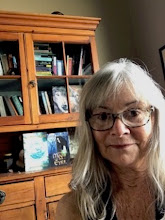
- nikki broadwell
- working writer wending her way through the labyrinth that is self-publishing
Showing posts with label writerunboxed. Show all posts
Showing posts with label writerunboxed. Show all posts
Wednesday, March 30, 2011


Friday, January 28, 2011
Interview with well-known fantasy author, Juliet Marillier
1. Although you are a well-known author, please tell us about yourself. How long have you been writing and what prompted you to start?
~~I've been writing seriously for about fifteen years and I've been a published author for twelve. I have thirteen novels to my credit, eleven for adults and two for young adults. I started quite late, in my mid-forties. Prior to that I worked as a music teacher and in the public service. But I didn't suddenly start writing as an older person-I loved reading as a child, especially myths, legends and fairy tales, and I wrote reams of stories up until the time I started university, when I decided to concentrate on my other passion, music.
~The decision to start writing again later in life arose from a major change in my personal circumstances. I wrote my first novel, "Daughter of the Forest", with no particular intention of submitting it to a publisher-I think really I was writing to get some powerful feelings out. I had always loved the fairy tale"The Six Swans", and I wanted to investigate how the dramatic events of that story would affect a real life family. That book took me three years to write, very much part time as I was raising children and working in a day job at the same time.
2. Please tell us about your early publishing experiences. Was it difficult/easy getting your initial book/books published?
~~I was very fortunate. Firstly I sent my manuscript to a local publishing house here in /western Australia, because they had a policy of giving feedback on manuscripts by local writers. I knew they wouldn't publish "Daughter of the Forest" because it was not their kind of book, but I did want the independent feedback. I knew very little about the publishing business then, and had no idea of whether my work was good enough. That publisher sent me a very encouraging letter, suggesting I try the ms on one of two major commercial publishers. Only one, Pan Macmillan, was at that stage accepting unsolicited manuscripts, so after a bit of rewriting I sent the synopsis and three chapters to them, along with the first three chapters of a sequel I had started writing, and an outline for a planned trilogy. Within a few weeks they asked to see the full manuscript. Lots of frantic formatting followed. On my fiftieth birthday the publisher rang me and said they wanted to make an offer for the two books (this later grew to three.) Best birthday present ever!
3. Have you been with the same agent/publisher since the beginning? Do they market your books to your satisfaction?
~~My books are published by different publishing houses in different countries. For my Australian and New Zealand editions, I have stayed with Pan Macmillan Australia all through. They gave me my start, and they've always shown a high level of support and commitment. Once or twice I've had publicists who did't work as hard as I'd have liked but currently I have a fantastic team, who provide many opportunities-print media interviews, guest blogging, appearances at writers' festivals and so on. I love that as I find the need to self-promote is wearing and gobbles up valuable writing time. I do maintain a big online presence: a website (www.julietmarillier.com), a Facebook fan page, regular contributions to genre writing blog Writer Unboxed (www.writerunboxed.com) and two online fan forums. I reply individually to reader's e-maqils, answer their comments on Facebook, and pop in to the fan forums. I also feature readers' art work on my website and Facebook page-a lot of it is extremely good.
~I've had changes of publisher for my US, UK, and German editions over those twelve years. Those changes have been sometimes good, sometimes bad, always a bit traumatic. Currently my US publishers are ROC (Penguin) for my adult books and Knopf (Random House) for my young adult books. Both have excellent publicity departments and do a great job.
~I know some authors, including authors published by mainstream houses, do hire their own publicist as well as using the in-house publicists. I haven't ever done so, but it seems a viable option provided you are confident that the cost will be balanced by an increase in sales.
~I've never been represented by an agent for my Australian business, but I have a New York agent who deals with everything else. Russell Galen from Scovil Galen and Ghosh Literary Agency has been representing me for about nine years.
4. How do you view the changes in the publishing industry? Do you believe alternative methods, such as: self-publishing, small press, agent press, POD, e-books and others are viable alternatives? In your opinion is there still a stigma associated with these routes to the marketplace?
~~I think changes of this kind are inevitable. E-books have proven highly convenient for various reasons, and look like being here at least until the next piece of reading technology comes along. I don't like the vast amount of illegal file-sharing that goes on. Readers who believe things should be free don't consider that a free file earns no royalty for the author, and that without those royalties coming in, the author may not be able to afford to go on writing. But in general, I think e-books can exist alongside print books with each serving its separate purpose. (Personal note: I don't own an e-reader and don't intend to get one. I love the whole experience of reading a print book.)
~Small professionally run independent presses are great. Aspiring writers should always check the credentials of any independent press, to make sure they are not 'vanity publishers' disguised as something else. A genuine small press should do all the stuff a mainstream publishing house does, just on a smaller scale. A reputable small press/indie publication in your past should not damage your chances with an agent or mainstream publisher.
~Self-publishing is a vald option but needs to be approached carefully. It there's a self-published book in your past, agents will usually view it as a negative when you're seeking representation for a new book. There is still a stigma attached to self-pubished novels. There are some very successful authors out there whose first books were self-published (for instance, action adventure writer Matthew Reilly.) But for every Matthew Reilly there are hundreds of self-published authors whose books sank into obscurity. I'd suggest exhausting the other options before going into the self-publishing route, and not doing it unless you are very, very sure your ms is a winner. For a self-published novel, the services of a professional editor are ESSENTIAL, even if you think your work is flawless.
~Having said that, self-publishing is always a better option than a vanity press, which you should only consider if your book is just for your family and friends.
5. Good editing as a given, what advice would you give an author struggling to get their books published?
~~Keep writing. Keep polishing your craft. We go on learning and improving all our lives. Don't work in isolation-critique groups and writing buddies can help you analyze why you are struggling. Critiquing other people's work often gives you fresh insight into your own. Keep reading, because that's the most painless way to learn the craft. Only keen readers become good writers.
~Always have Plan B ready. AS soon as your manuscript goes off to an agent or publisher, start on the new project. Don't waste time and energy worrying.
~These days, publishers are being cautious because of the global economic downturn. It's a highly competitive market for writers, and it's difficult for new writers to be picked up. Don't assume that if you write what's currently hot, the market will still want it by the time you finish the ms. Write the story you feel passionate about, the one that comes from the heart. Don't submit your ms before it's ready. Learn to work hard, to revise and rewrite, to accept critique in a professional way and to deal with setbacks, because we all have those. Keep your expectations realistic. Case of instant fame and fortune are rare as hens's teeth. There's no magic formula for success, but you can't go wrong with this: talent+good work ethic+self-belief.
Thank you, Juliet, for your informative and thoughtful answers!
Subscribe to:
Posts (Atom)